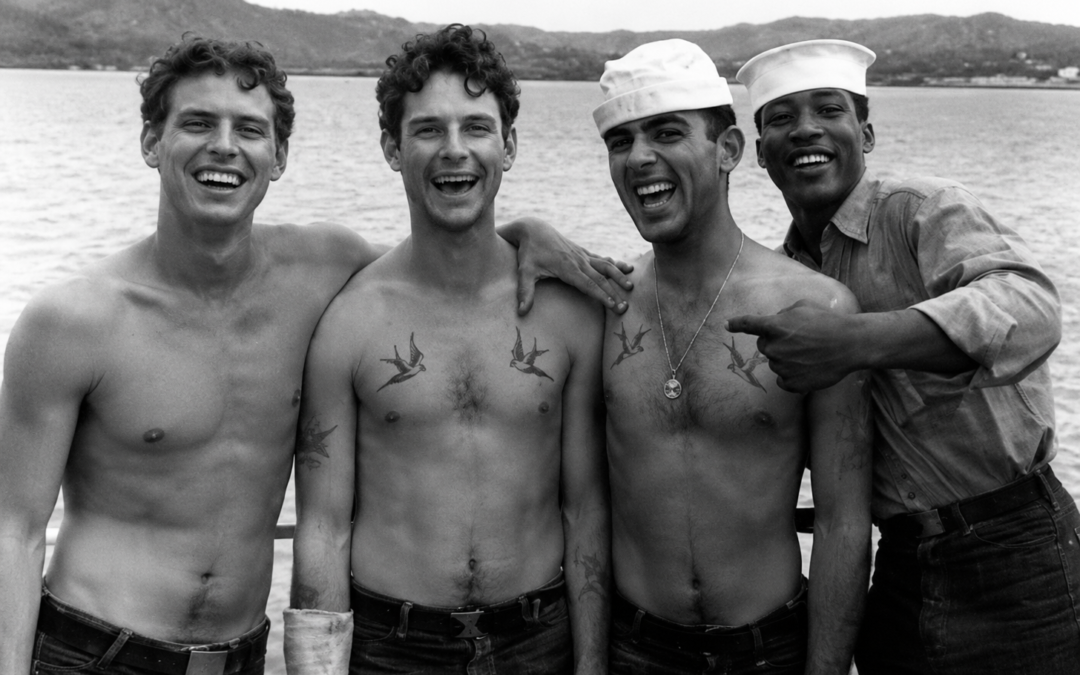
Swallow tattoos are one of the most recognisable designs in traditional tattooing, their meaning is often simplified or misunderstood. While they are commonly associated with sailors and classic maritime imagery, their roots go deeper—grounded in observation, natural form, and the process of turning real-world subjects into lasting visual symbols on skin.
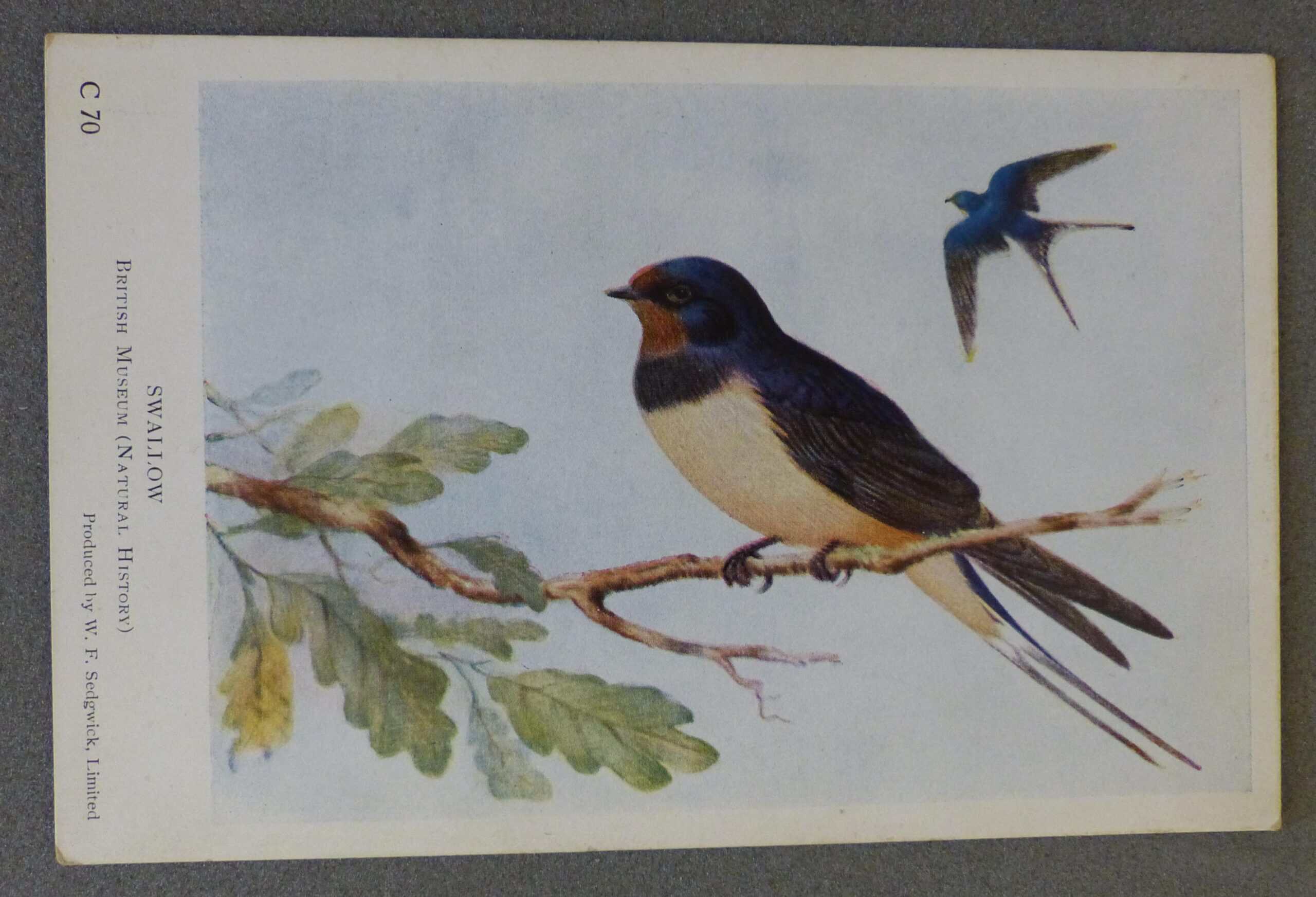
Long before tattoo flash filled studio walls, the swallow was already a subject of interest in natural history illustration. Its forked tail, balanced proportions, and streamlined silhouette made it an ideal form to study and draw. These natural qualities translated easily into early tattoo design, where clarity and recognisability were essential.
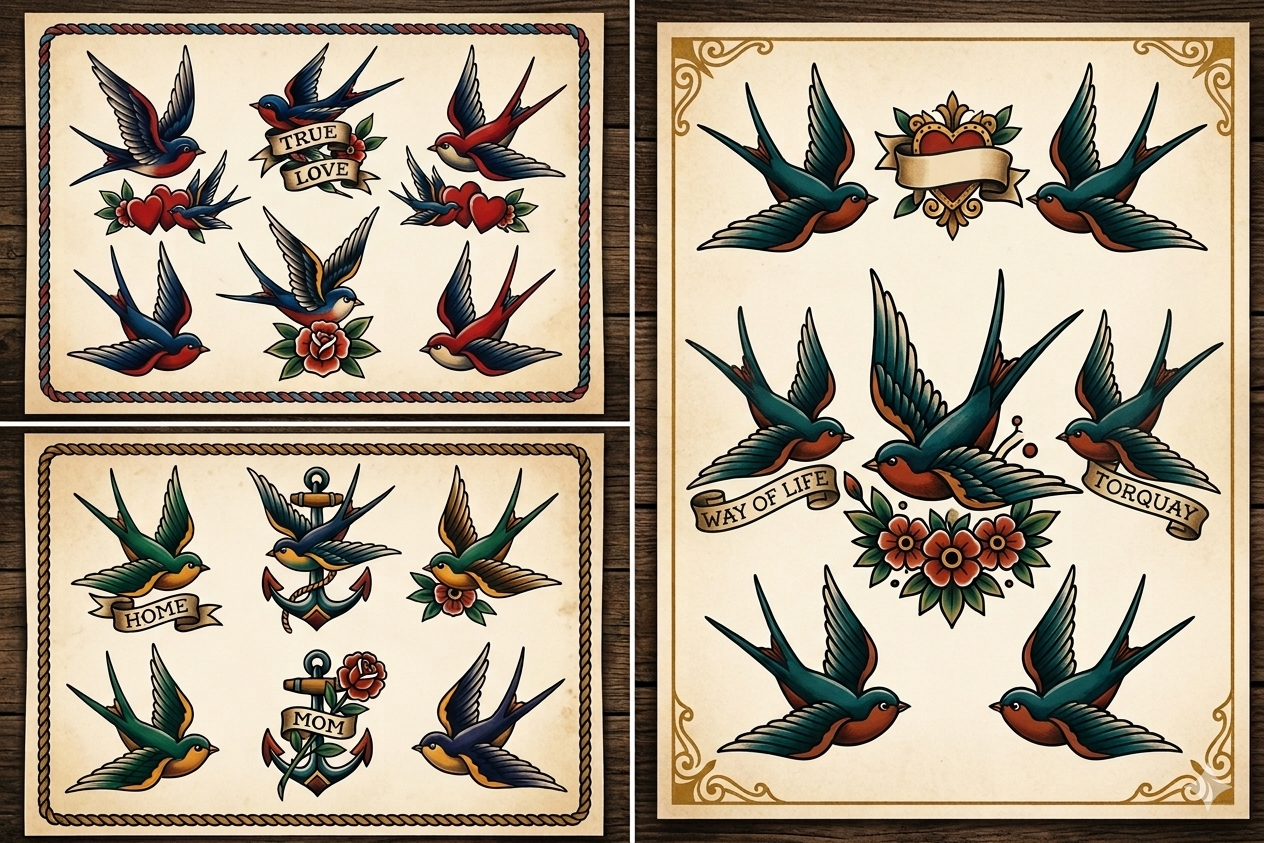
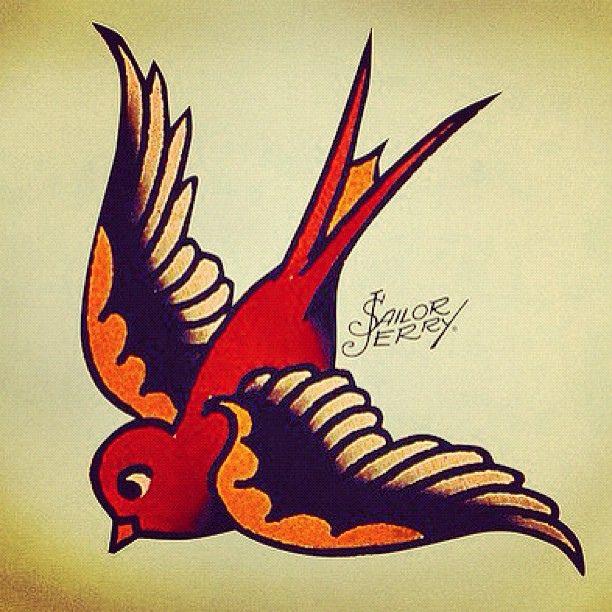
As tattooing developed, the swallow was refined into a bold, reduced shape—stripped back to its most readable elements so it would hold This process of simplification is what connects the original natural form to the traditional tattoo version seen today.
The classic swallow comes from: a, solid design built for longevity. Traditional tattooing, it’s not just about meaning—it’s about structure, readability, and durability.
BOLD WILL HOLD.

What Do Swallow Tattoos Represent?
Why Swallow Tattoos Are Often Misunderstood
Swallow tattoos are frequently misinterpreted due to:
- Simplified or low-detail tattoo styles
- Visual confusion between similar bird species
- Internet misinformation and tattoo folklore
As a result, meanings are often projected onto the design rather than derived from its historical context.
Swallow Tattoos and Prison Symbolism
Swallow tattoos are often incorrectly linked to UK prison culture, but this association is largely a misconception. In reality, the swallow has deep roots in traditional maritime tattooing, where it symbolised travel, loyalty, and safe return rather than incarceration or criminal identity.
A lot of confusion comes from how tattoo imagery changes over time. As designs are reduced into bold, minimal forms, small birds such as swallows and swifts can become visually similar. In simplified or heavily stylised work, key identifying features like the swallow’s forked tail may be lost, which leads to misinterpretation.
Language also plays a role. The term “jailbird” is sometimes used in the UK to describe someone who has been in prison, and this can create a loose association between bird imagery and incarceration in general. However, this is cultural slang rather than the history of traditional tattooing
From personal experience growing up around Birmingham and starting out in tattooing there, swallow tattoos were commonly seen across a wide range of people—particularly within older working-class and traditional tattoo culture. They were chosen from flash sheets for their bold, timeless design and strong visual impact, not because they carried any prison-specific meaning.
There is no established or recognised system in UK prisons,, where swallow tattoos function as a coded mark or identifier. While bird tattoos may appear in prison environments as they do in many subcultures, they are not standardised symbols, and the swallow itself is not recognised as a prison tattoo.
The swallow is one of the most iconic motifs in maritime tattoo culture. It represented long-distance travel, endurance, and the hope of returning home safely. In some sailor traditions, swallows were even believed to carry the soul of a sailor lost at sea, reinforcing themes of return and remembrance rather than punishment or confinement.
Well-executed swallow tattoo—especially in bold traditional style—is instantly recognisable. Its forked tail, balanced wings, and clean silhouette clearly distinguish it from other bird designs. As with most tattoos, meaning is shaped by context, style, and placement rather than any single fixed interpretation.
What Do Swallow Tattoos Represent?
Traditional Swallow Tattoo Meaning (Maritime Origins)
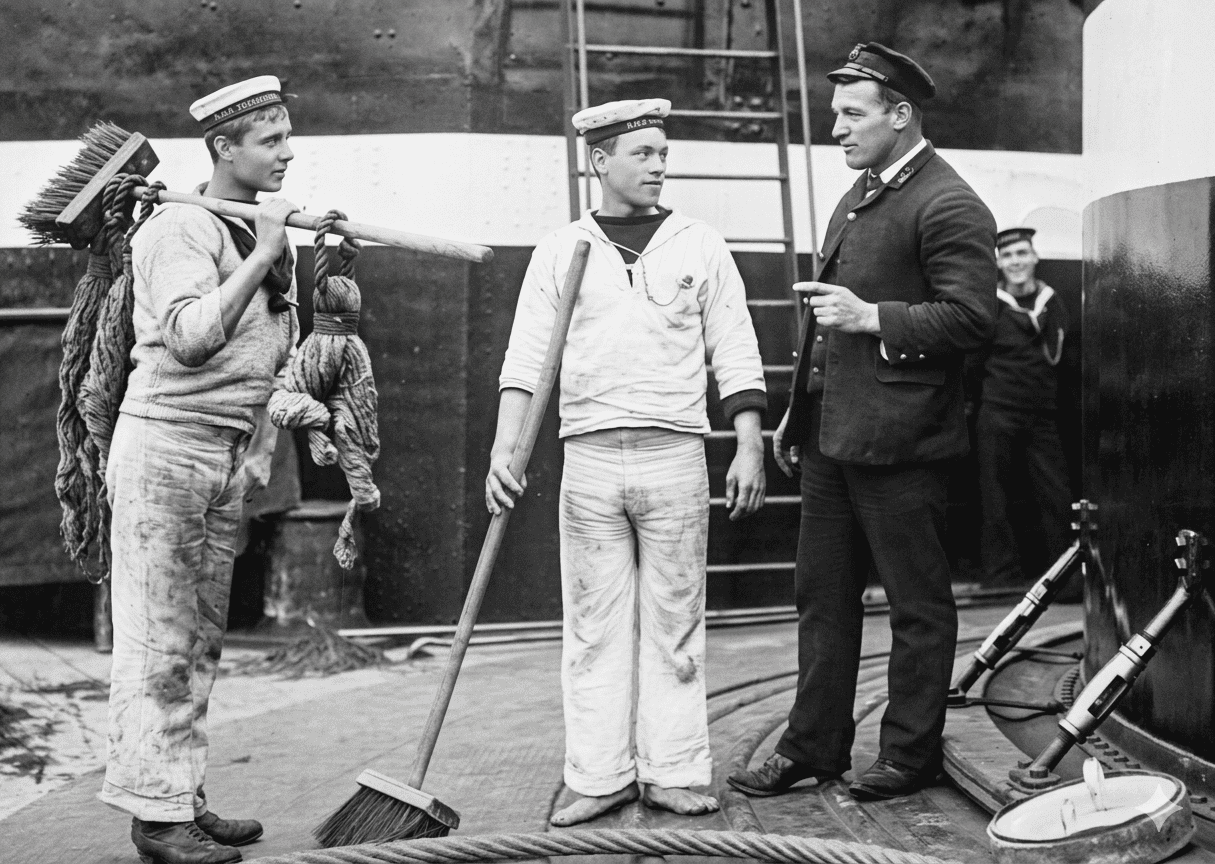
In traditional tattooing, swallow designs are strongly tied to seafaring life and long-distance travel. They are one of the most recognisable motifs in naval tattoo culture, symbolising experience gained at sea, safe passage, and the hope of returning home.
Sailors historically used swallow tattoos as markers of time spent travelling and surviving difficult journeys across oceans. Because swallows are migratory birds that always return home, they became a natural symbol of loyalty, endurance, and safe return.
This maritime foundation is the origin of almost all modern swallow tattoo symbolism.
Modern Swallow Tattoo Meaning
In contemporary tattoo culture, swallow meanings have broadened beyond strict nautical tradition. While the original symbolism still influences interpretation, modern swallow tattoos are often chosen for more personal reasons.
- Freedom and independence
- Loyalty and emotional connection
- Safe journeys or life transitions
- Returning home or starting a new chapter
Rather than functioning as a “coded system” of experience, swallows are now widely used as symbolic markers of change and personal movement through life.
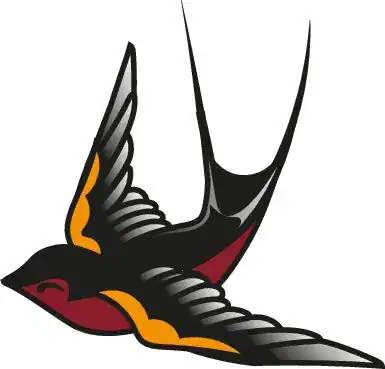
This expansion of meaning is also where misunderstandings begin, as symbolism becomes detached from its original context.
Maritime Culture
Swallow tattoos sit in that interesting overlap between maritime practicality, superstition, and later stylised “traditional tattoo” symbolism. The meaning you describe is broadly accurate in spirit, but a lot of the detail we now repeat comes from layered sailor folklore rather than a single, uniform historical rule.
Origins in sailor culture
Swallows became strongly associated with sailors in European maritime culture (especially British and later American naval traditions) because they are migratory birds that reliably return to the same nesting area each year. For sailors, that mapped neatly onto life at sea: long absences, dangerous travel, and the hope of return.
This “always returns home” idea is the core symbolism. It wasn’t just sentimental—it functioned as a psychological anchor in an environment where:
- voyages could last months or years,
- navigation was uncertain,
- and mortality at sea was a constant background reality.
In some folk beliefs, swallows were even thought to carry the souls of drowned sailors to heaven or guide them safely home. That idea appears in broader European maritime superstition rather than being a formal naval doctrine.
Why swallows specifically
Swallows were also practical visual subjects for early tattooing:
- simple silhouette that worked well with early hand-poked techniques,
- high contrast design that aged relatively well,
- easy to mirror (important in chest or hand symmetry),
- recognisable even in rough execution.
This made them one of the foundational motifs of what later became “traditional” Western tattoo style.
Evolution into broader tattoo culture
As naval sailors interacted with port cities worldwide (notably through ports in Britain, the Caribbean, and the Pacific), tattoo traditions spread and hybridised. By the late 19th and early 20th centuries:
- swallow tattoos were no longer exclusive to sailors,
- but remained shorthand for maritime identity and travel,
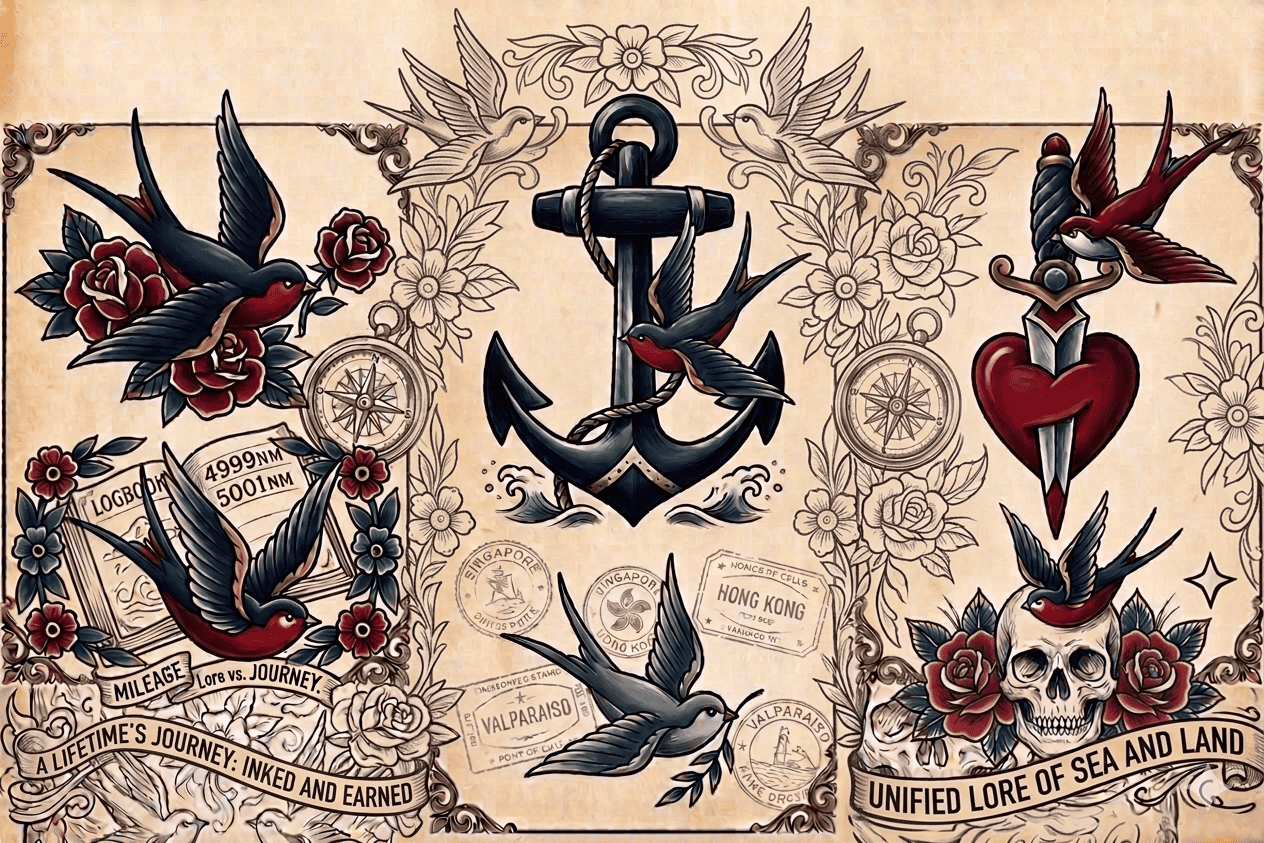
- and eventually became a core motif in Western “old school” tattooing alongside anchors, ships, daggers, and roses.
Modern tattoo culture often preserves the symbolism but removes the strict maritime context. Today, swallows can represent:
- travel and freedom,
- returning home after hardship,
- or personal endurance through long periods of change.
Related motifs worth noting
Swallows often appear alongside other naval symbols:
- Anchors: stability, grounding, surviving storms
- Sparrows (often confused with swallows): similar but historically more associated with different voyage milestones in tattoo lore
- Daggers or banners: sacrifice, loyalty, or lived hardship
The swallow’s key distinction is that it leans more toward return and continuity, rather than simply survival or toughness.
From Illustration to Tattoo
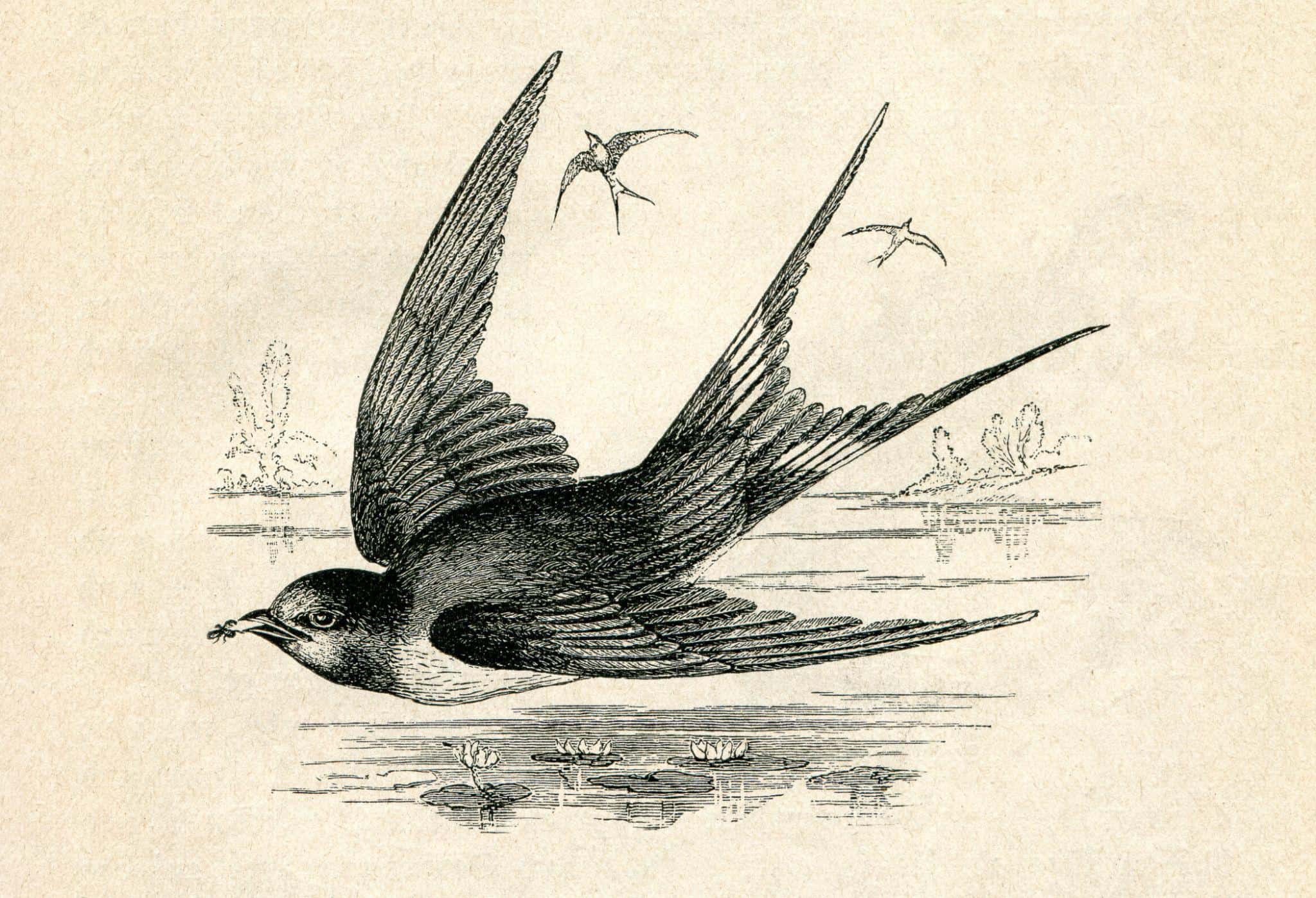
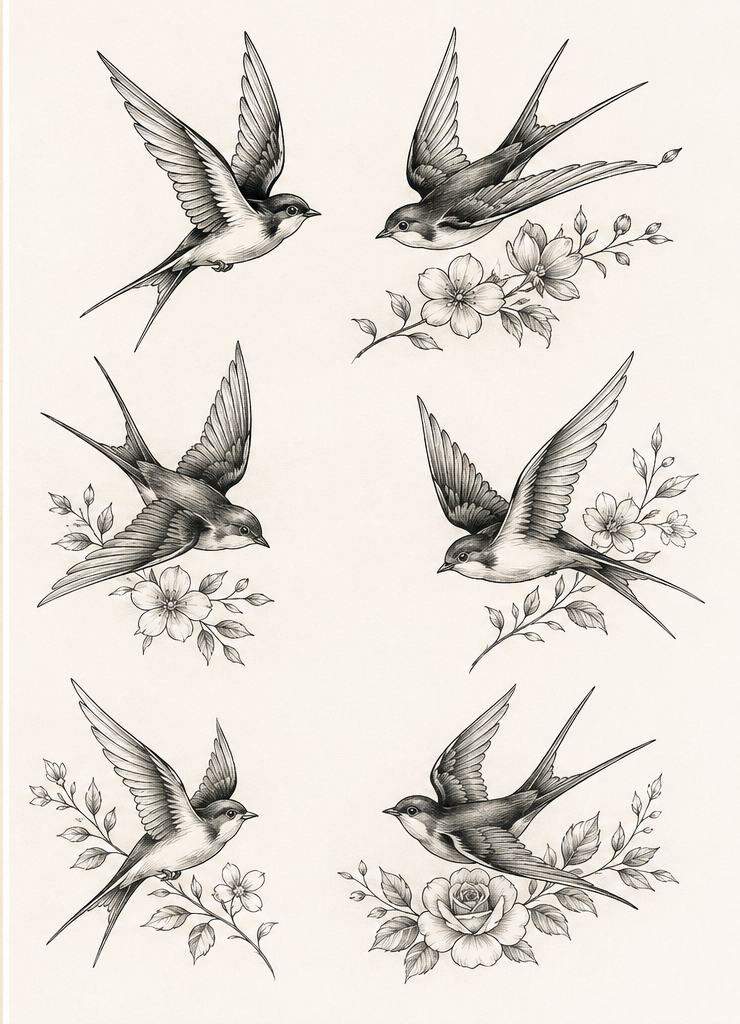
Early swallow designs were influenced by natural history drawings, where the bird’s form was studied and recorded in detail. As tattooing developed, these shapes were simplified into bold outlines and solid colours that could hold over time in the skin.
This process of reduction is what gave the traditional swallow its distinctive look — clean, readable, and built to last.
Design and Placement
Swallow tattoos are strongly associated with traditional tattooing. Bold outlines, solid colours, and simple shapes make them highly durable, which is one of the reasons they’ve remained popular for decades.
They are often tattooed in pairs, commonly on the chest, shoulders, or hands. This pairing reinforces ideas of balance and movement, while the shape of the swallow naturally follows the flow of the body.
Placement meanings
Placement carried meaning just as much as the motif:
- Chest (often two swallows): symbolised loyalty, love, or “home is worth returning to”
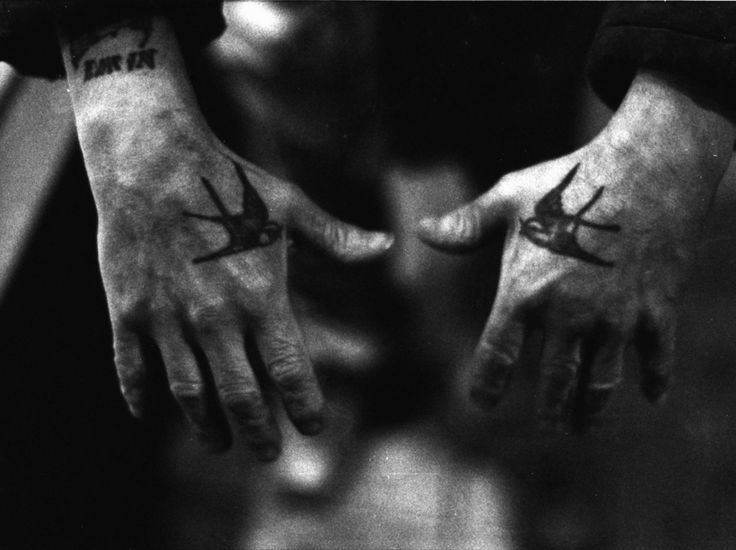
- Hands or knuckles: experience and visible proof of time at sea
- Neck or behind ear (later developments): faster, more modern tattoo styling rather than strict sailor code
The pairing of two swallows became especially common. One interpretation is “journey out and return,” reinforcing the migration symbolism.
How do these designs translate to real skin
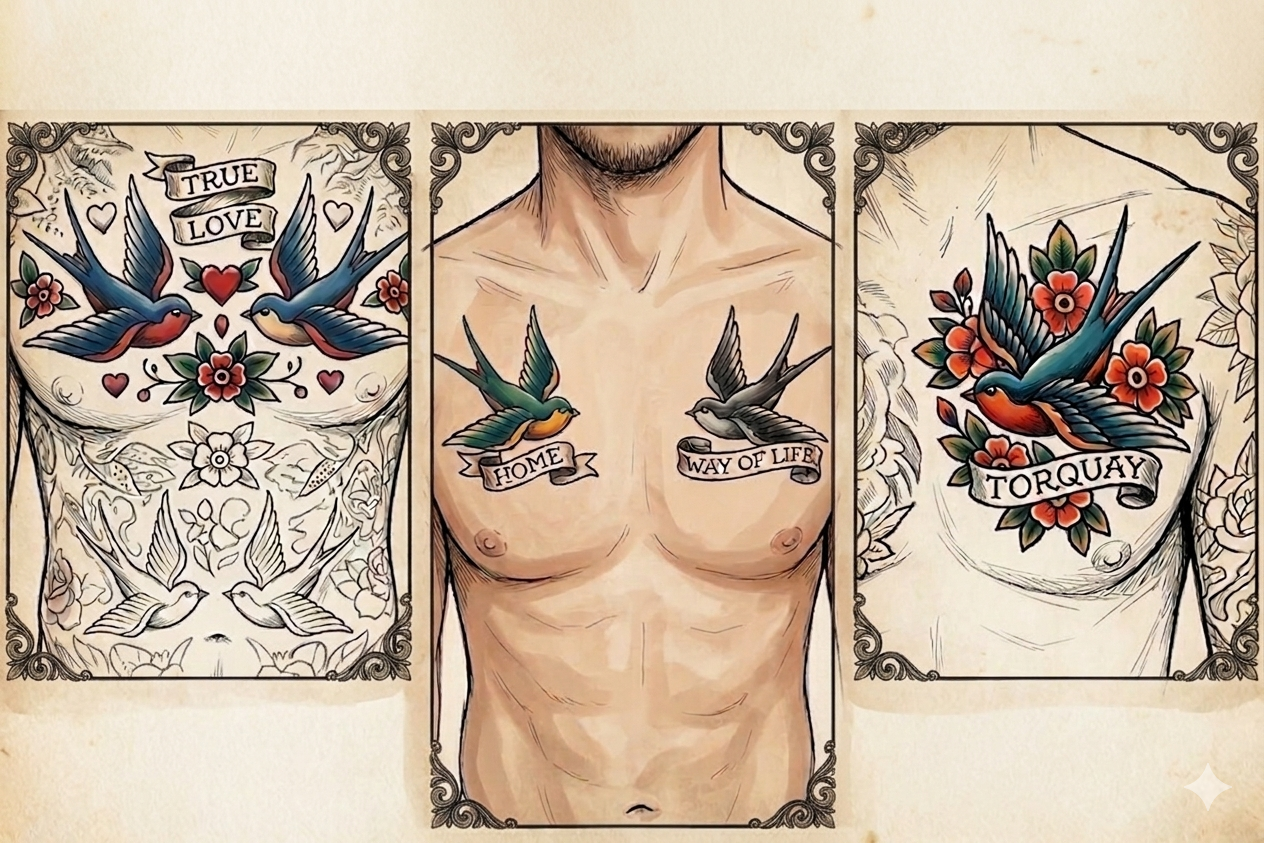
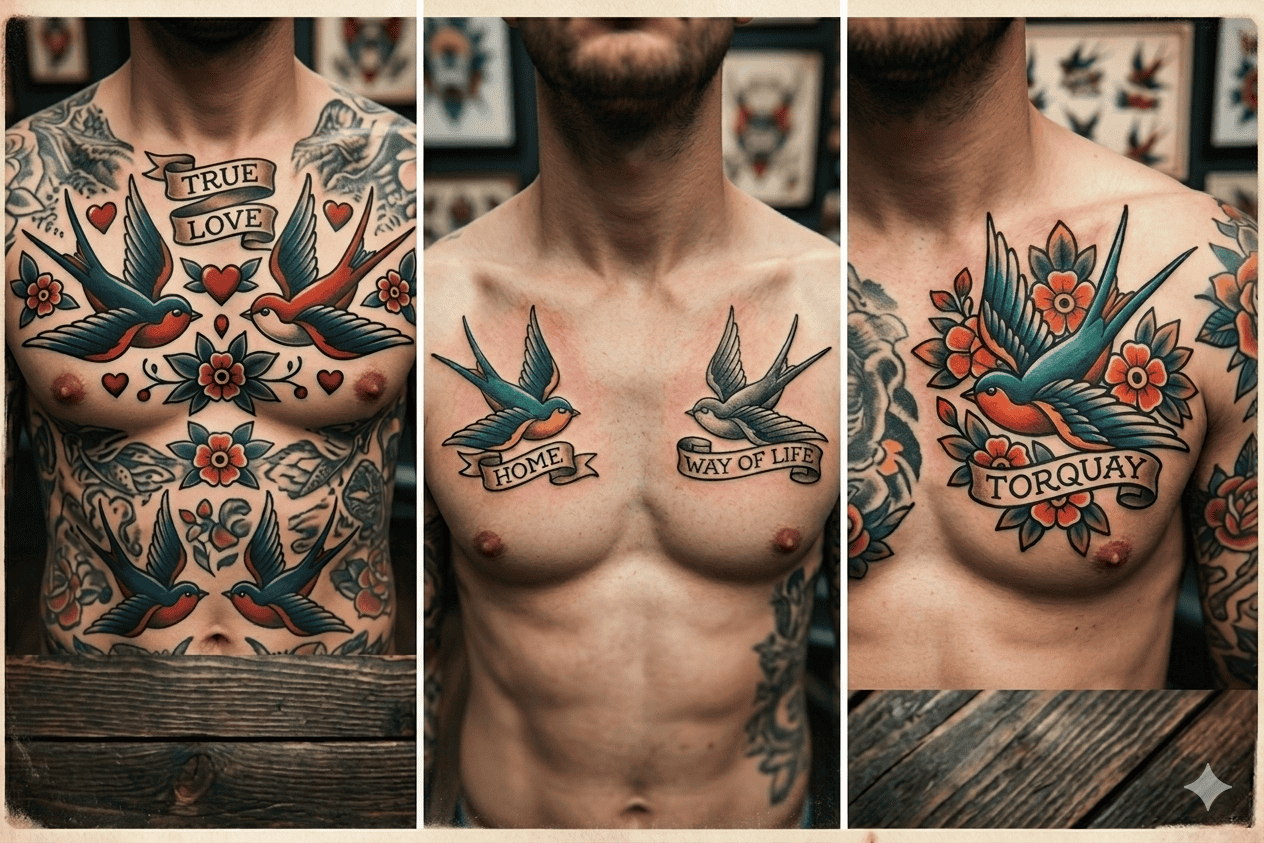
Please Note The images shown below are digital mockups designed to demonstrate how these traditional swallow flash designs can look when placed on the body. Final results, including placement, sizing, and color vibrancy, will vary depending on individual skin type, body anatomy, and how your skin holds ink. Our artists will custom-fit and adapt every design specifically for you during your session to ensure the best possible result..
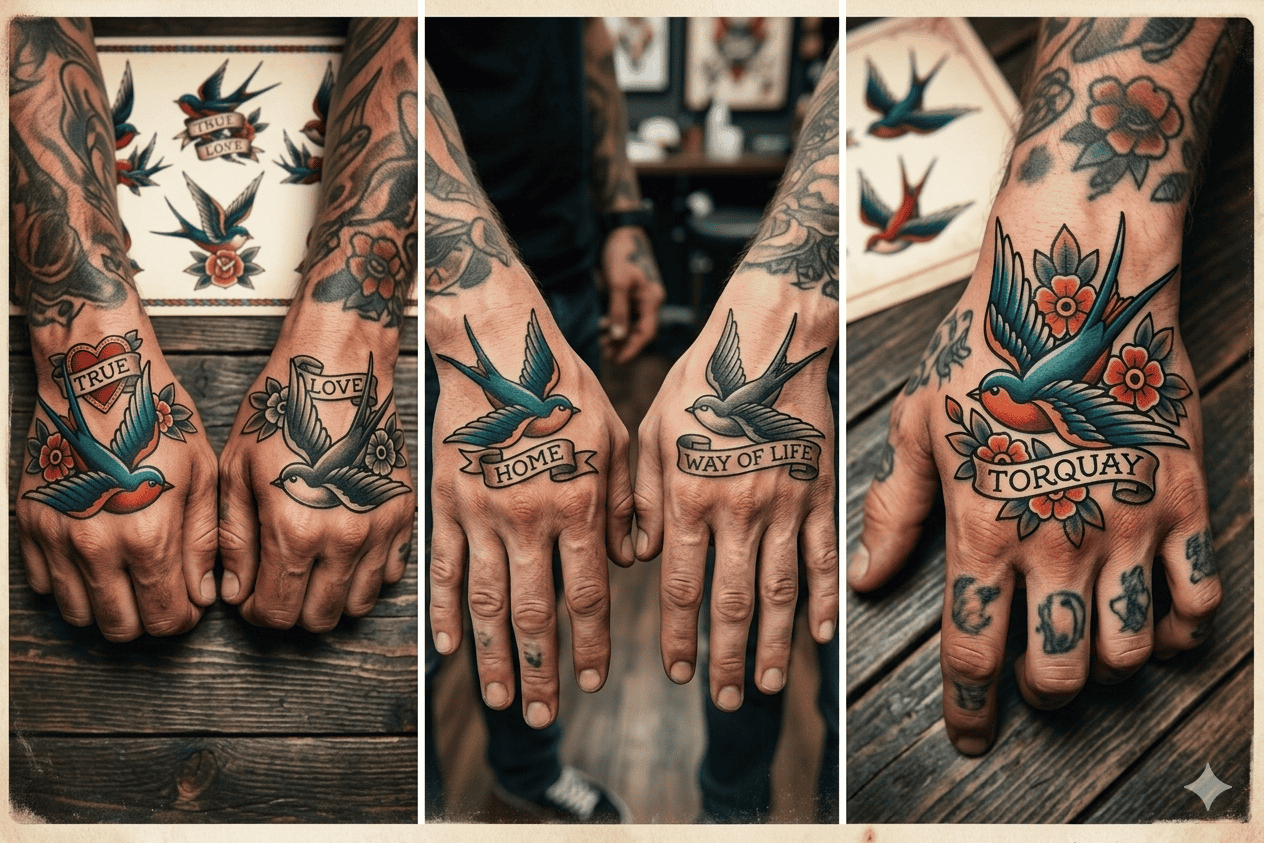
Why Swallow Tattoos Were Placed on the HandsYour Title Goes Here
Visibility as Identity
Hand tattoos carried a very specific purpose in sailor culture: they were immediately visible markers of identity. When a sailor stepped off a ship into a port, their hands were one of the first things people saw—whether they were working, drinking, or interacting socially.
A swallow on the hand functioned almost like a badge:
- it signalled time spent at sea
- it marked the wearer as experienced, not new
- it communicated belonging within maritime culture
Unlike tattoos hidden on the body, hand tattoos couldn’t be concealed. That visibility made them a deliberate statement rather than just decoration.
A Mark of Confidence and Commitment
Tattooing the hands has always been a higher-commitment choice. Even historically, it meant:
- accepting constant visibility
- embracing a working-class, seafaring identity
- showing you weren’t concerned with social respectability on land
For sailors, this aligned with reality. Many lived outside traditional social structures for long periods, and visible tattoos reinforced that separation.
In that sense, a swallow on the hand wasn’t just about travel—it was about owning that life fully.
Symbolism in Motion
There’s also a subtle but important visual reason for hand placement.
Swallows are birds defined by movement—flight, direction, migration. When placed on the hands:
- they move as the hands move
- they appear almost animated during gestures
- they reinforce the idea of travel and motion in a literal way
This gives the tattoo a dynamic quality that works especially well with the simplified, flowing shapes of traditional swallow designs.
Symmetry and Pairing
It’s common to see swallows tattooed on both hands, mirroring each other.
This pairing can be read in a few ways:
- departure and return
- journey out / journey home
- balance between two states (sea and land)
From a design standpoint, symmetry across the hands creates a strong visual rhythm—especially when the wings are angled to follow the natural structure of the knuckles.
Practical Tattooing Considerations
Even in early tattooing conditions, the hands were a workable placement:
- relatively flat areas across the back of the hand
- easy to access for the tattooer
- suited bold, simple designs like swallows
However, hand tattoos also:
- wear faster due to exposure and movement
- require strong linework and contrast to hold over time
This is another reason why swallows—simple, bold, high-contrast—became such a natural fit for the placement.
Modern Interpretation
Today, swallow tattoos on the hands still carry echoes of their origins, but the meaning has broadened. They can now represent:
- personal journeys or life changes
- freedom and movement
- returning to a sense of self or “home”
At the same time, the placement still signals something similar to its historical roots:
👉 visibility, commitment, and a willingness to wear your identity openly
Why the Swallow Endures
The reason swallow tattoos haven’t faded is that they sit in a rare overlap:
- visually simple enough to stay timeless
- symbolically flexible enough to adapt to modern meanings
- historically grounded in real occupational culture
- aesthetically strong in both traditional and modern tattoo systems
They started as a sailor’s language of survival and return, but evolved into one of the most adaptable symbols in tattooing.